Production & Packaging
“Natural Stone” Is Not a Complete Bracelet Specification
A colour name and a photograph leave too much of a buying decision open. Ask about material identity, treatment and care before comparing quotations.
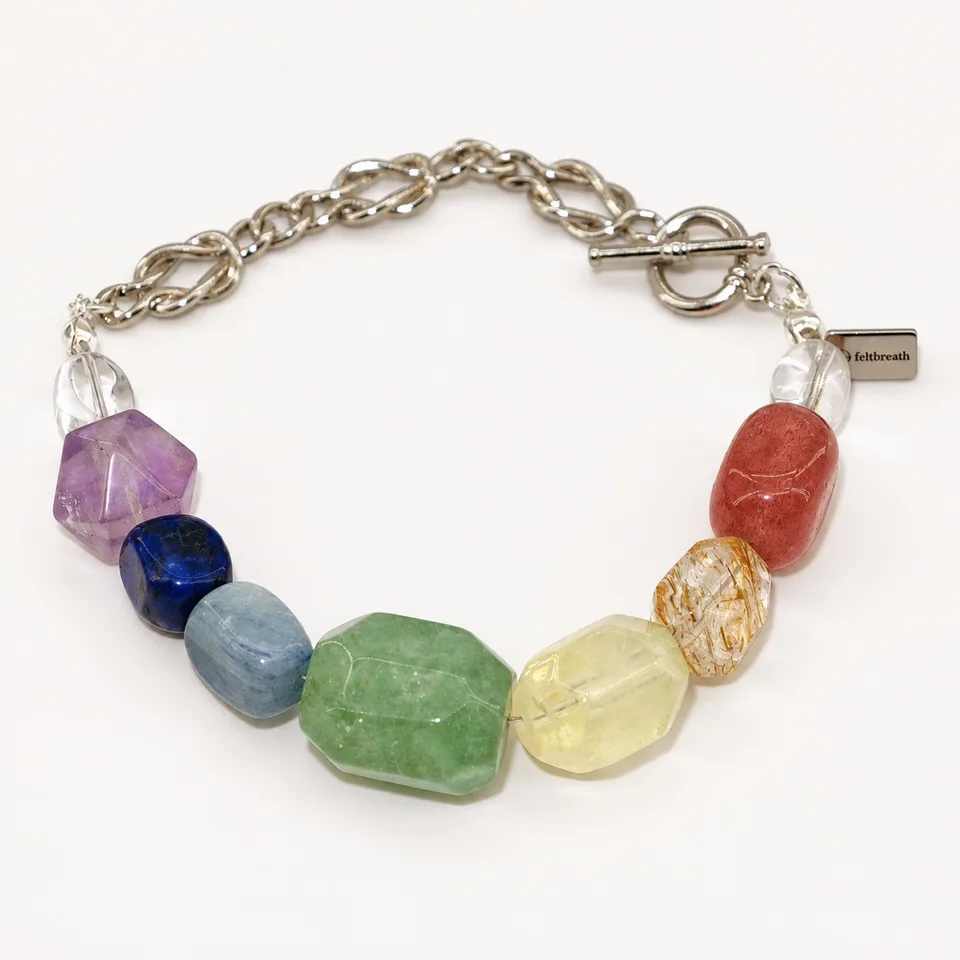
Direct answer
- Ask for the material identity, known treatments and suitable care guidance in writing.
- Compare the sample, quotation and proposed product description against the same specification.
- Use appropriate identification or testing for unresolved claims; a photograph is not verification.
Three details behind one label
“Natural stone” is a starting description. It does not tell a buyer which material is being supplied, whether it has received a treatment or how the finished item should be cared for.
The Gemological Institute of America’s treatment guide explains that treatments can change colour or clarity and may affect durability or care. It covers processes including dyeing, surface coating and fracture filling. Some dyes can be affected by solvents or prolonged exposure to sunlight; care depends on the actual material and treatment.
That is general gem knowledge, not a finding about the treatment status of a Feltbreath design shown on this page.
Ask three questions in writing
What is the material? Ask for its identity beyond the collection name or colour description. If a trade name is used, ask the supplier to explain what it denotes. Keep metal components, spacers and other parts of a mixed-material bracelet in the same specification.
What treatments are known? Ask the supplier to state the information they can support and identify what remains unknown. Do not turn a missing answer into an “untreated” claim.
What care guidance fits this item? Ask for instructions that account for the materials and treatments in the finished piece. Keep this information with the product specification so it can follow the item into packaging and retail copy.
Compare like with like
Our suggested buying approach is to put the sample, quotation and proposed product description side by side. Check whether they describe the same materials, components, size and finish. Record any unresolved point before approving an order.
If a material claim matters to the purchase and cannot be substantiated, seek suitable identification or testing. A photograph, uniform colour or a product name cannot settle the question on its own.
Make the specification usable after purchase
Keep the confirmed material description and care information in a record your buying, packing and customer-facing teams can use. If a later order changes a component, review the record before repeating the earlier description.
A useful supplier conversation can begin with a few specific questions. Share your product brief and the details you need clarified before choosing a sample.
Technical reference: GIA, An Introduction to Gem Treatments, reviewed 19 September 2026. The purchasing workflow above is Studio Label Works’ suggested approach.
Planning a studio product project?
Share your studio type, launch moment and product idea.
Start a Project